
Last updated November 21, 2026
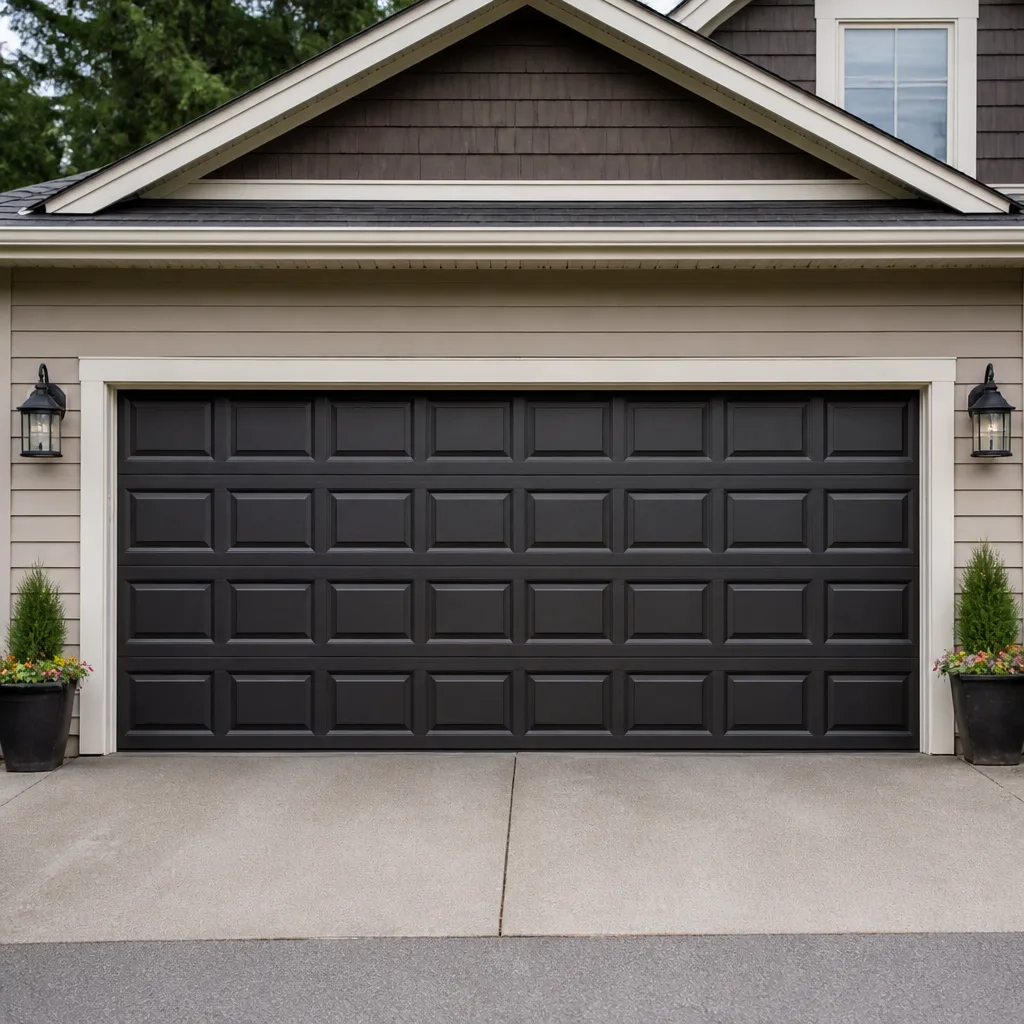 Raised-panel steel
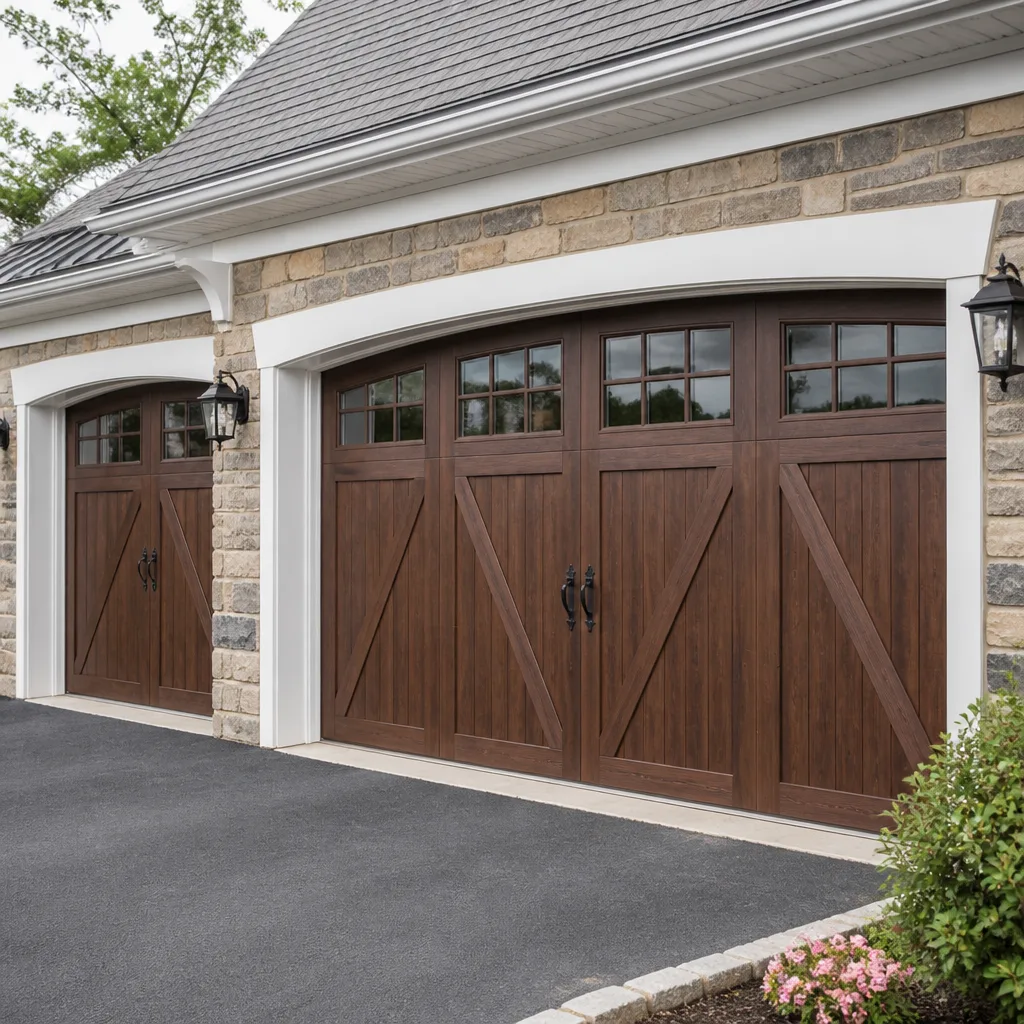 Carriage house
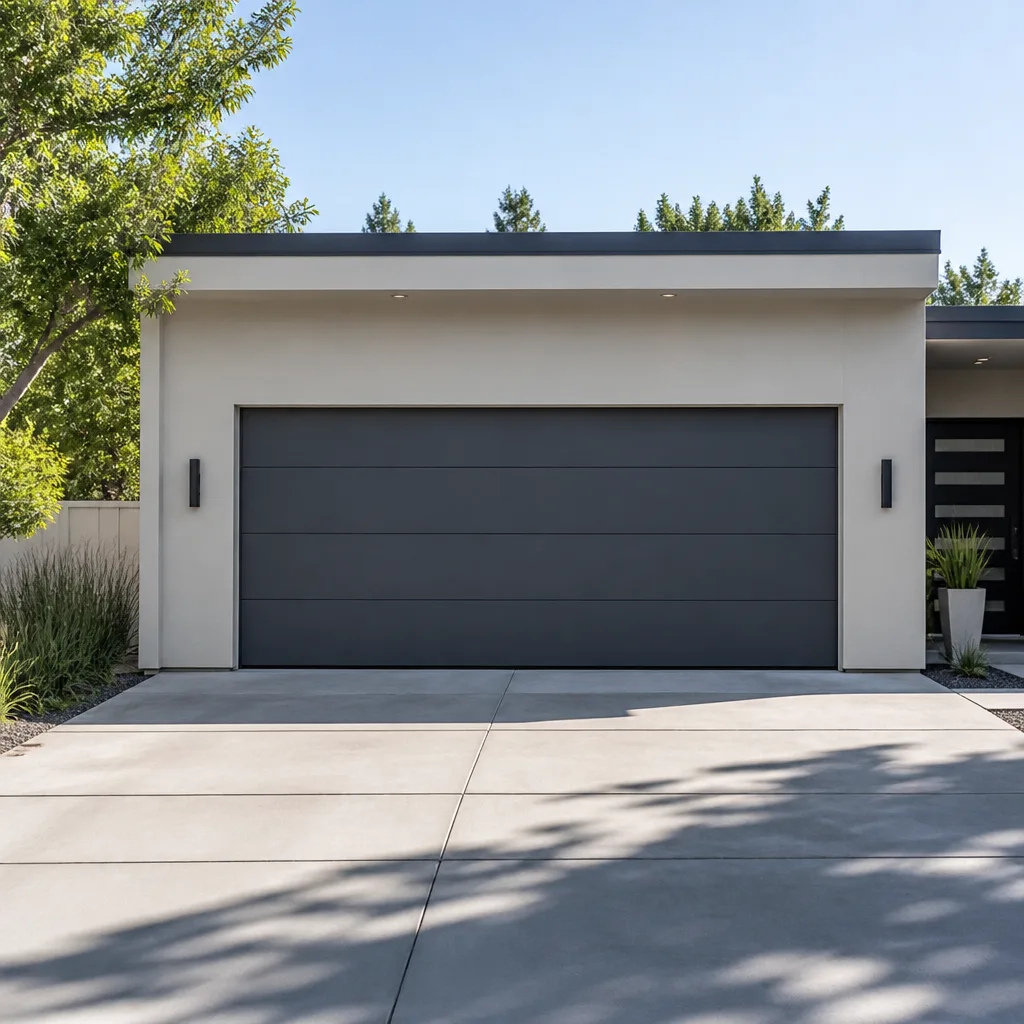 Modern flush
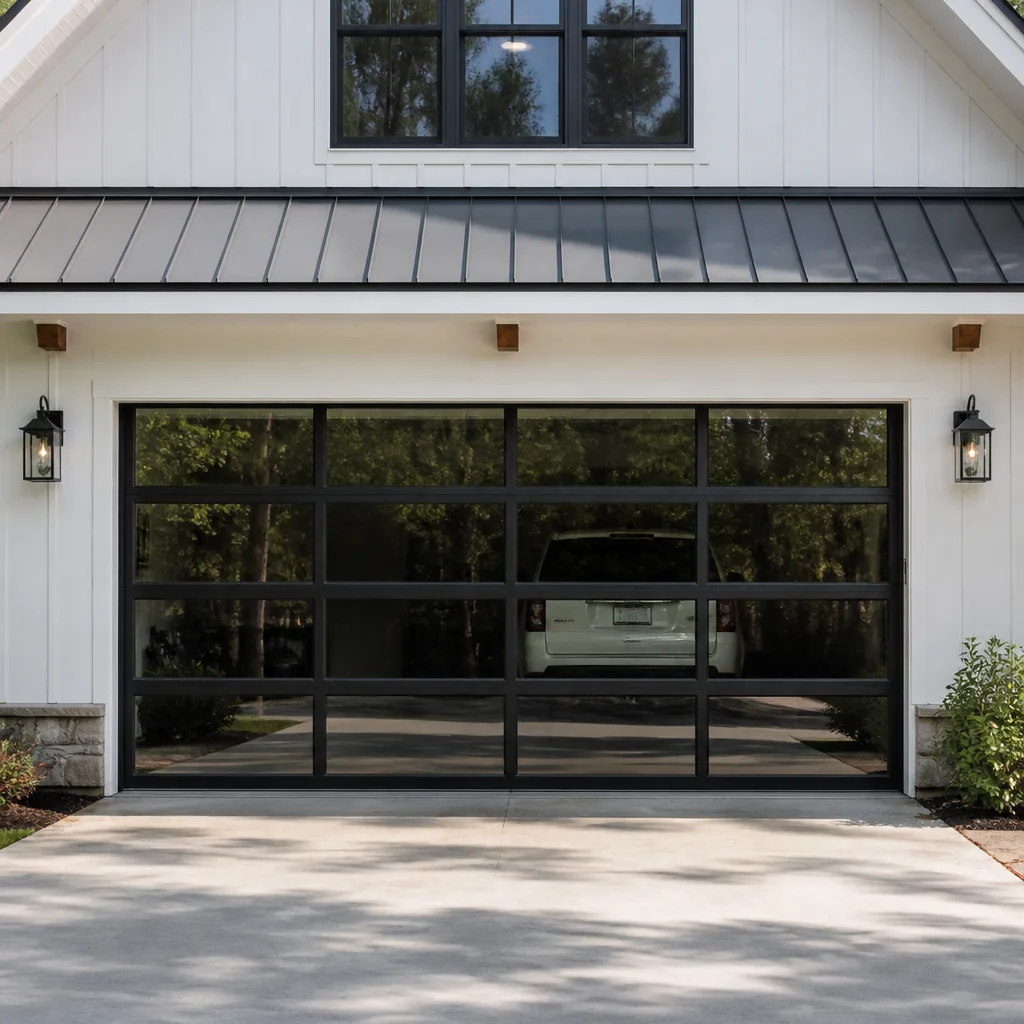 Full-view glass
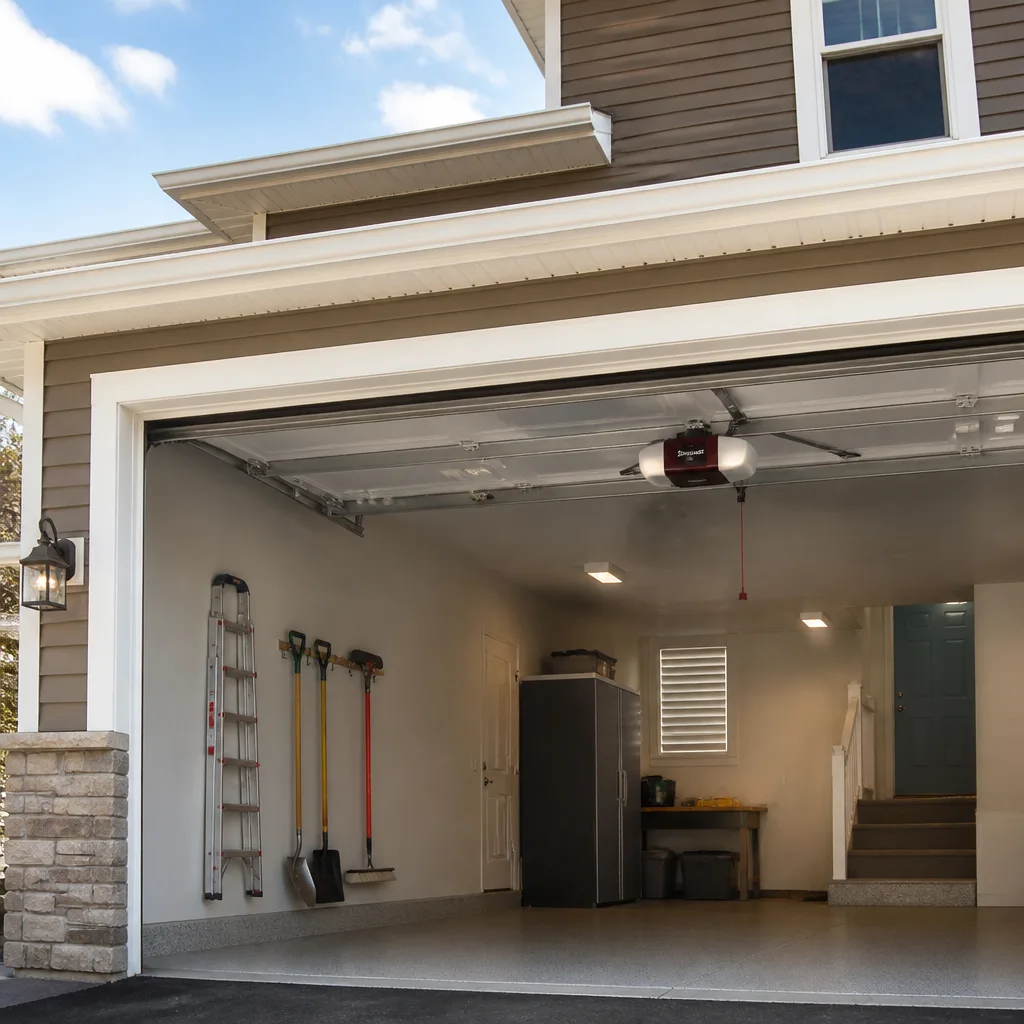 LiftMaster openers
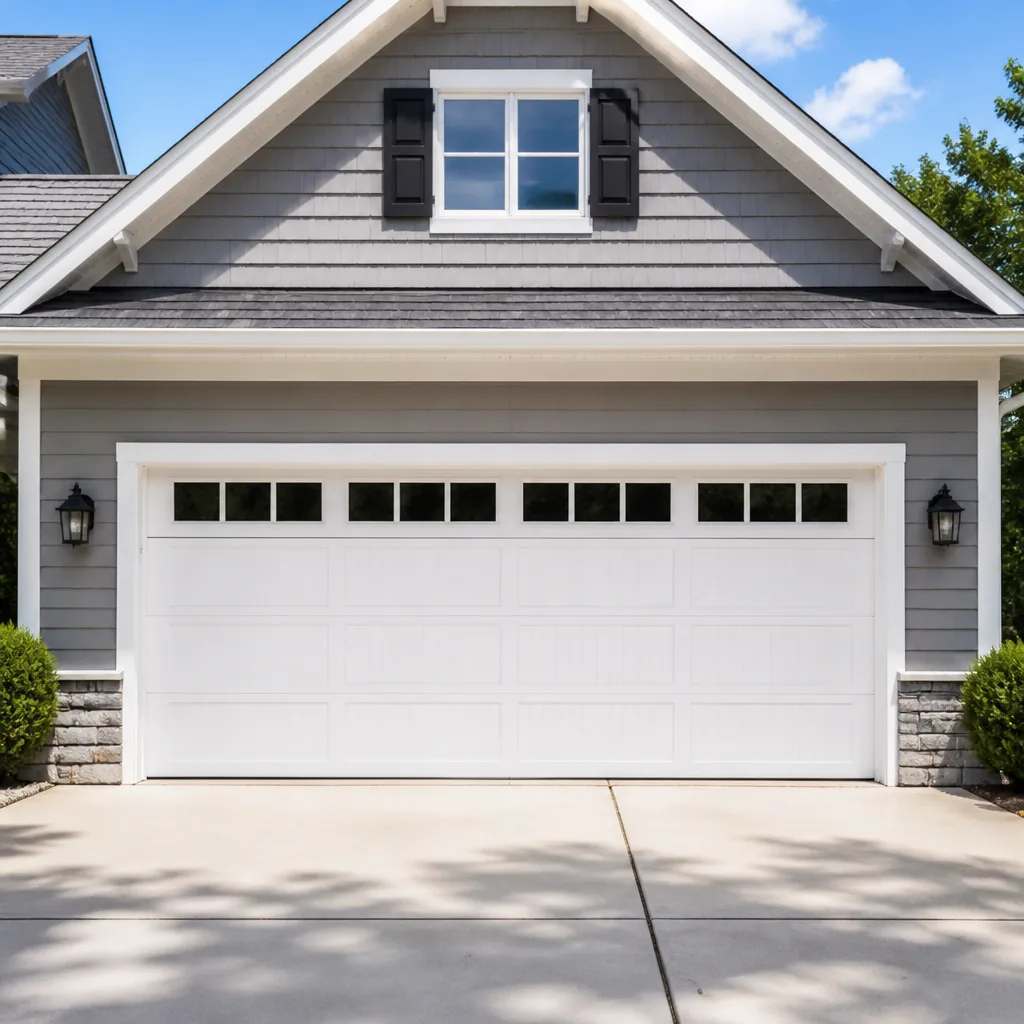 Chamberlain openers
Full 25-point door and opener safety check with every visit - springs, cables, rollers, tracks, and your LiftMaster or Chamberlain opener included
You get a price before we start. It does not change when the pro arrives.
Get your free estimateThe Complete Guide to Garage Doors in Waldorf
Your garage door moves more times per year than your front door does in a decade. Yet most homeowners can’t name three of its parts until one of them breaks at 11 p.m. and the whole thing stops dead in the doorway. That gap between how hard the door works and how little we think about it is where most expensive surprises start. A garage door isn’t one machine; it’s five systems sharing a track, and a failure in any one of them can look like a failure in another. This guide maps every component, the way each one fails, and the repair-or-replace decisions worth knowing before you call anyone in Waldorf.
Quick Answer
A garage door is five interdependent systems: the door and panels, the springs and cables that counterbalance it, the tracks and rollers that guide it, the opener that drives it, and the safety hardware that keeps it from crushing what’s underneath. Most breakdowns trace to one failing system, not the whole door, which is why a careful diagnosis often lands on a small repair instead of a full replacement. Matching the symptom to the right system is the single most useful skill a Waldorf homeowner can bring to a repair call.
Styles & brands we work with
- Raised-panel steel
- Carriage house
- Modern flush
- Full-view glass
- LiftMaster openers
- Chamberlain openers
Table of Contents
- The Five Systems Inside Your Garage Door
- Springs and Cables: The Most Dangerous Part of the Door
- Openers and Smart-Home Compatibility
- How Waldorf’s Humidity and Clay Soil Affect Your Door
- Repair or Replace? A Decision Guide for Each Part
- Mixing Brands Across an Older Door
- What Charles County Expects From a New Installation
- A Maintenance Routine That Actually Fits a Waldorf Climate
The Five Systems Inside Your Garage Door
Think of your door the way a mechanic thinks about a car. It’s not one part; it’s several systems that only work when they all work. When a door “just stops,” the cause almost always lives in one of these five areas, and knowing which is the difference between a small fix and an unnecessary replacement.
1. The door and panels. This is the large moving face, whether it’s a sectional door made of stacked panels or a single-slab door. Panels take the impacts, carry the weight, and are the first thing to show dents, rust, or bending.
2. The counterbalance system. Torsion or extension springs, plus the cables that connect them, hold most of the door’s weight so a human or an opener can lift it. When people say “the spring broke,” this is the system they mean. It’s the highest-stakes part of the door.
3. Tracks and rollers. The metal rails on each side guide the door up and back. Rollers and hinges let it bend and travel. When a door shudders, squeals, or pulls to one side, this is usually where the fault sits.
4. The opener. The motorized unit that drives the door, including the gear, the drive mechanism (belt, chain, or screw), and the circuit board. Openers fail in their own ways, distinct from door mechanics.
5. Safety and control hardware. The safety reversing sensors at the floor, the wall push button, and the remote or keypad. These don’t move the door, but they decide whether it’s safe and whether it responds at all.
In our experience, a Waldorf homeowner calls about a door that “won’t open,” and half the time the door and springs are fine and the trouble is an opener gear or a knocked sensor. Split the problem into these five buckets before you spend money.
Springs and Cables: The Most Dangerous Part of the Door
The springs are what make a heavy door lift like it weighs nothing. They’re also the most dangerous part of the entire assembly, and that’s not a sales line. A torsion spring is wound under heavy tension and stores enough energy to cause serious injury the moment it releases without warning. For that reason, spring work isn’t a homeowner job, and we’d rather you knew the risks than tried it on your own.
Springs fail in two common patterns. Torsion springs, mounted on a bar above the door, usually snap cleanly and take the door entirely out of action until replaced. Extension springs, which run along the sides on older setups, stretch out over time and can lose tension gradually, so the door gets heavier and the opener labors. When a spring breaks, you’ll usually hear a loud bang from the garage; the door may then feel impossibly heavy or won’t lift at all.
How springs are priced matters here. A price for one spring covers one spring. Most doors use a matched pair of springs that are sized and wound together, and pairs are almost always replaced together because mixing a new spring with a worn one puts uneven stress on the door. So a pair costs roughly twice a single-spring job. If someone quotes you a “spring price” without saying whether it’s one or a pair, ask before you agree.
Cables are the safety backup and deserve the same caution. They carry the spring tension and can fray, kink, or jump a drum. A worn cable is a warning you shouldn’t ignore, because a failed cable can whip loose under load. This is the kind of repair we handle through our garage door spring repair service: we inspect the full counterbalance system, not just the one broken piece, and set a price in writing before any work begins.
Openers and Smart-Home Compatibility
The opener is the part most people can name, and it’s also the part most often blamed for a door problem that’s really mechanical. A door that’s hard to lift will make even a healthy opener struggle and eventually wear out. So the first step on any opener complaint is to test the door by hand (with the opener disconnected) to see whether the door itself moves freely. If it doesn’t, the opener isn’t the problem.
When the opener really is the issue, the failure is usually one of these:
- A stripped nylon gear inside the unit, which shows up as motor noise with no door movement.
- A bad circuit board, which can leave the door unresponsive or the lights blinking in a pattern that isn’t normal.
- A dead backup battery in newer openers that won’t lift the door during a power outage.
- Pressed or misaligned safety sensors, which stop the door from closing even though the motor runs.
- A worn belt or chain, which sags and makes the door loud or jumpy.
Smart-home setups add one more layer. Openers from LiftMaster and Chamberlain with built-in Wi-Fi, plus app-connected models from Genie and Craftsman, tie into phone apps and home hubs, which is convenient until the connection drops and the door won’t respond to the app. That’s usually a network or pairing issue, not a dead opener. Our garage door opener repair covers the motor, the wiring, the sensors, and the smart connectivity side, so you don’t have to guess which layer failed.
One compatibility note worth knowing: an older opener and a newer door aren’t always a happy match. If someone replaced the door but kept the old opener, the lift force and travel limits may not fit the new door’s weight. If you’ve had a door replaced elsewhere and the opener now strains or stops partway, the opener likely needs to be re-set or replaced to match the door.
How Waldorf’s Humidity and Clay Soil Affect Your Door
Waldorf sits in Charles County, where summers run humid and the soil carries a lot of clay. Both matter more to your garage door than most people realize, and they shape the repairs we see here compared with drier parts of the country.
Humidity drives corrosion and swelling. Cycles of damp air and drier stretches push moisture into the steel parts of the door and hardware: hinges, rollers, springs, and the bottom brackets. Rust on a roller or hinge doesn’t just look bad; it stiffens the door’s travel, makes the opener work harder, and shortens the life of the whole mechanism. The bottom section of the door and the brackets near the floor are the first places to check. On the door itself, humidity can also swell wood-composite panels and cause paint to blister along the seams.
Clay-heavy soil is the other local factor. Clay holds water and expands and contracts with the seasons, and that movement can shift a garage slab just enough to throw a door slightly out of level. When that happens, the door may rub one track, pull to one side, or leave a gap at the bottom. If your door has started scraping or dragging and nothing about the door itself looks wrong, the slab and the track alignment are worth a look.
What that means practically: Waldorf doors tend to need hardware checks and lubrication a little more often than doors in dry climates, and track alignment deserves attention after wet seasons. It’s not a flaw in your door; it’s the environment it lives in. (For neighbors just outside the city, our nearby coverage of Waldorf Garage Door Repair Pros reaches the surrounding towns, too.)
Repair or Replace? A Decision Guide for Each Part
The single most useful question in garage door ownership is whether a problem is worth fixing or worth replacing. Each system has its own answer, and getting it right is how you avoid the two worst outcomes: overpaying to repair something at the end of its life, or replacing something that had years left. Here’s how we think through each one.
- Springs: always repair, never replace the door because of a spring. A broken spring doesn’t mean a bad door; it means a tired spring. A matched pair is the standard fix. If your door is otherwise sound, this is a clean, contained repair.
- Cables: repair. Frayed or jumped cables are replaced; they don’t signal a door replacement on their own. Treat them with the spring system, since they share the load.
- Tracks and rollers: repair in almost every case. Bent tracks can usually be straightened or replaced, and rollers are inexpensive parts. Only severe structural damage, like a crushed track and a bent panel together, pushes toward replacement.
- Panels: repair a single dented or rusted section if the door is sectional and the affected panel can be matched. Clopay and Amarr, for instance, offer sectional panels that can be swapped individually. Replace the door when multiple panels are failing at once or the sections are no longer available.
- Openers: repair when the unit is otherwise sound and the fix is a gear, sensor, or board. Replace when the opener is beyond a simple part fix, especially if it can’t be made to work with the door’s weight. Older units also tend to lose parts support, which pushes the decision toward replacement.
A quick rule of thumb many technicians use: if the cost of a repair climbs toward the cost of a new door or opener, look hard at replacement. For a small part like a roller or sensor, repair clearly wins. For a full panel set or an aging opener that needs multiple fixes, replacement may serve you better over the long run. The written estimate should spell out which track you’re on.
Mixing Brands Across an Older Door
Garage doors and openers get swapped at different times, and in Waldorf we routinely see a door from one brand and an opener from another, or a repair part from a third. That’s fine as long as the pieces are matched by function, not by brand name. The good news is that most of the compatibility questions are about specs, not logos.
What actually needs to line up:
- Lift force and door weight. The opener must be rated for the door’s weight and travel. An opener meant for a light door will struggle on a heavier one regardless of brand.
- Spring sizing. A replacement spring has to match the door’s weight, wire size, and drum, not the name on the door. Springs are matched to the door, period.
- Remotes and controls. A remote meant for a Chamberlain opener won’t always talk to a Genie opener, and vice versa. If an older remote stops working, the fix is the remote or receiver, not the whole opener.
- Panel availability. Matching a damaged panel depends on whether that door line still offers the section. Clopay and Amarr are common here, which helps with matching.
- Smart-home bridges. App control depends on the opener’s own wireless tech. A newer smart opener and an older door can work well together once the travel limits are set.
We work on the brand you already have rather than pushing you toward one brand to make the job easy. Our technicians handle LiftMaster, Chamberlain, Genie, Clopay, Amarr, Wayne Dalton, Craftsman, and Raynor, and our technicians have up to 11 years of experience across those systems. That matters most when a door and opener are mismatched, because the fix depends on reading the actual equipment, not guessing.
What Charles County Expects From a New Installation
A like-for-like repair and a brand-new door installation are treated differently when it comes to permits and code. Replacing a broken spring or a worn roller is maintenance, and generally stays on the repair side. Installing a new door, or changing the door’s size, is construction work, and that’s where the county’s building department gets involved. We can’t quote you specific code requirements here, because those rules are set locally and can change, but there are sensible things to confirm before a new door goes in.
- Ask whether a permit is needed. A call to Charles County’s building department will tell you whether your installation needs one. It’s a quick question and worth asking before the work starts.
- Confirm the door meets current requirements. New doors generally need to meet the safety standards in effect at the time of installation, including the safety features that keep a door from closing on someone.
- Match the opener to the door. If a new door is going in with an existing opener, the opener’s force and travel need to be set for the new door. Building officials and installers both care about this.
- Keep the paperwork. If a permit is pulled, keep the sign-off with your home records. It helps if you ever sell.
If you’re unsure whether your project crosses into permit territory, that’s the moment to ask rather than assume. We set up a free measure and a written price for installations, and we can walk you through what your county typically asks for so you’re not surprised. For repairs, no permit is typically involved, which is one more reason to fix small problems before they grow.
A Maintenance Routine That Actually Fits a Waldorf Climate
A little routine goes a long way, and in Waldorf it pays to build it around humidity and the wet-dry swing. None of this is difficult, and none of it requires you to touch the springs or cables.
- Test the safety reversal monthly. Put a small object in the door’s path and close it. The door should reverse. If it doesn’t, stop using the opener and have the sensors checked.
- Lubricate moving metal parts. A garage-door-rated lubricant on rollers, hinges, and the track goes a long way in a humid climate. Avoid greasing the tracks themselves; keep them clean and dry.
- Look for rust on hardware. Check hinges, brackets, and the bottom section for early rust, especially near the floor, and treat it before it stiffens the door.
- Balance the door by hand. Disconnect the opener and lift the door halfway. A balanced door should stay put. If it drops, the springs may be losing tension.
- Watch the track alignment. After a wet season, check that the door runs straight and doesn’t rub one side. Scraping is a sign of a track or slab issue starting.
- Listen for new noises. A door that starts banging, squealing, or grinding is telling you something before it fails. Note when it happens: on opening, on closing, or both.
If any of this turns up something you can’t explain, that’s what the pros are for. Spring and cable work in particular is not a do-it-yourself job, and a strained cable or spring should be handled by a trained technician. Schedule a garage door repair inspection if you’re seeing rust, scrapes, or a door that no longer balances.
Common Mistakes to Avoid
- Replacing the whole door because of a broken spring. A failed spring is a contained repair, not a verdict on the door. If someone quotes you a full replacement for a snapped spring alone, get a second opinion.
- Trying to wind or unwind a spring yourself. This is the most dangerous part of the door and causes serious injuries. Leave spring and cable work to a trained technician.
- Blaming the opener for a mechanical problem. A door that’s hard to lift wears out openers. Test the door by hand first; the problem may be in the springs or tracks.
- Ignoring a bent track or jammed door. Forcing a stuck door can bend panels and strain cables. Call before you keep pushing the button.
- Skipping the permit question on a new door. Waldorf homeowners sometimes install a door without checking with Charles County’s building department. It’s a quick call that saves headaches later.
- Letting rust and humidity buildup go unchecked. In a humid climate, small rust spots turn into stiff rollers and strained openers faster than most people expect.
- Mixing an old opener with a new door without resetting it. A new door needs the opener’s force and travel limits re-set, or it will work against the door instead of with it.
See the difference
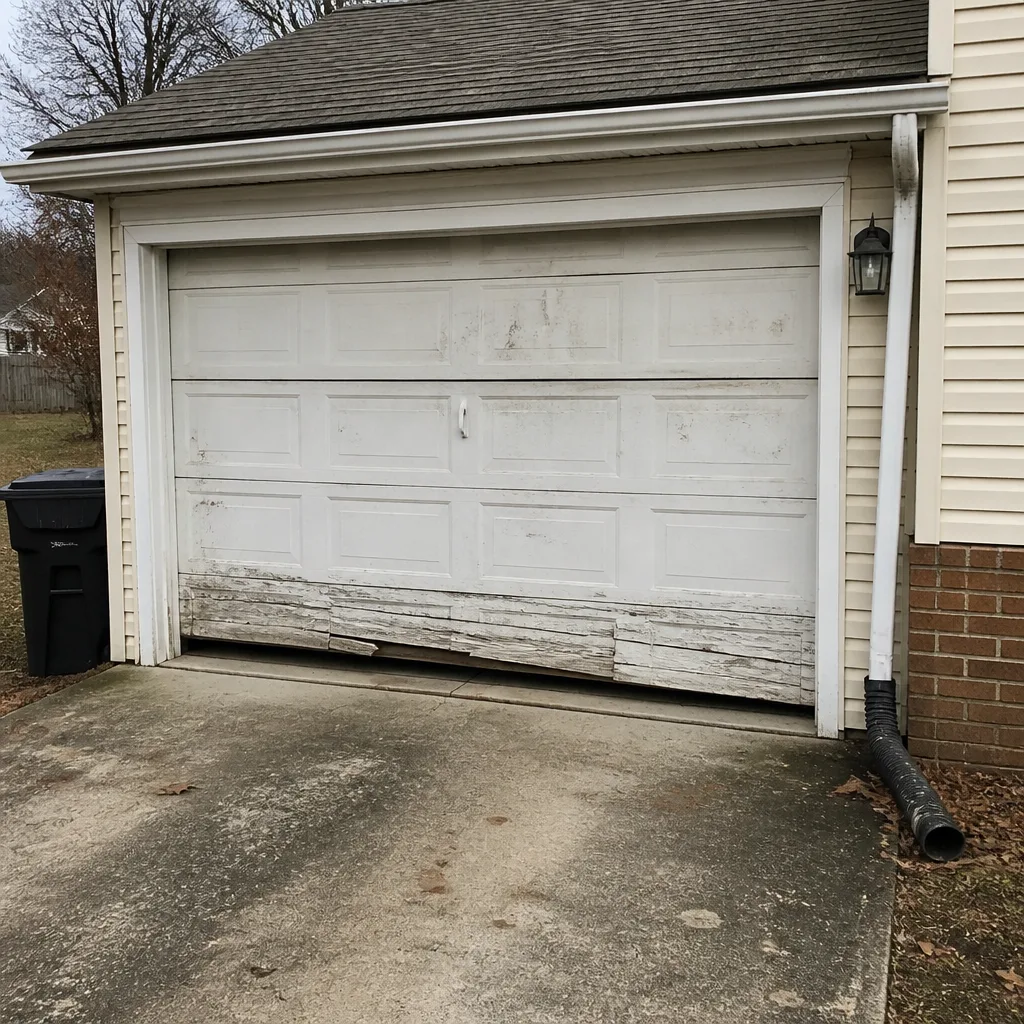 Before
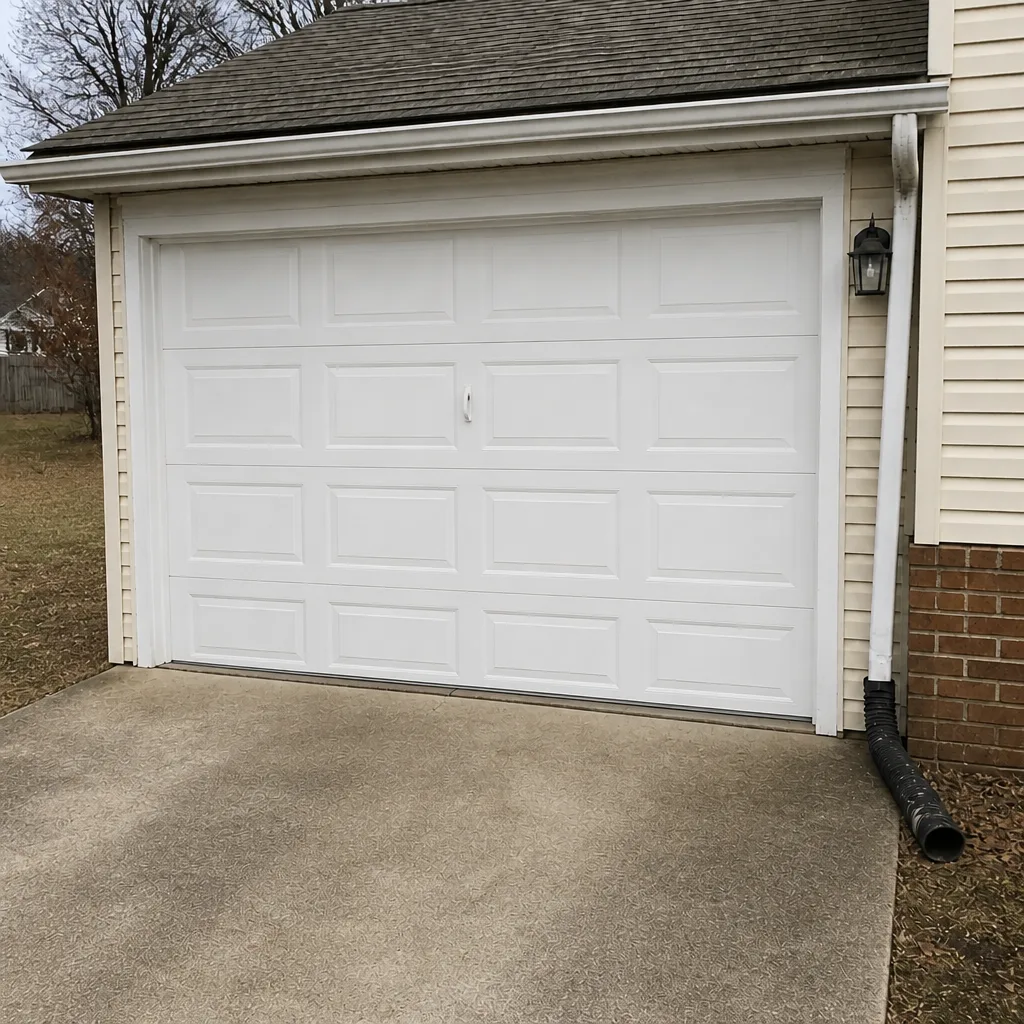 After
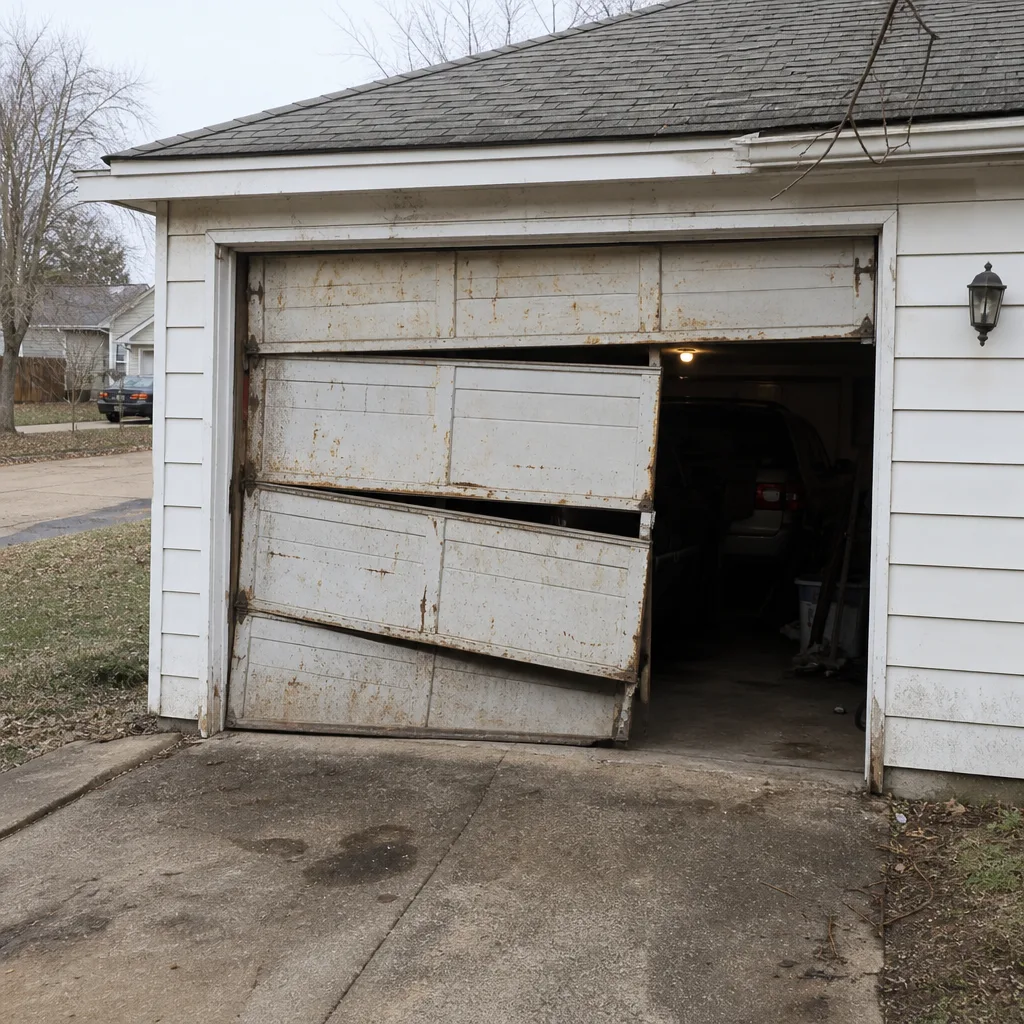 Before
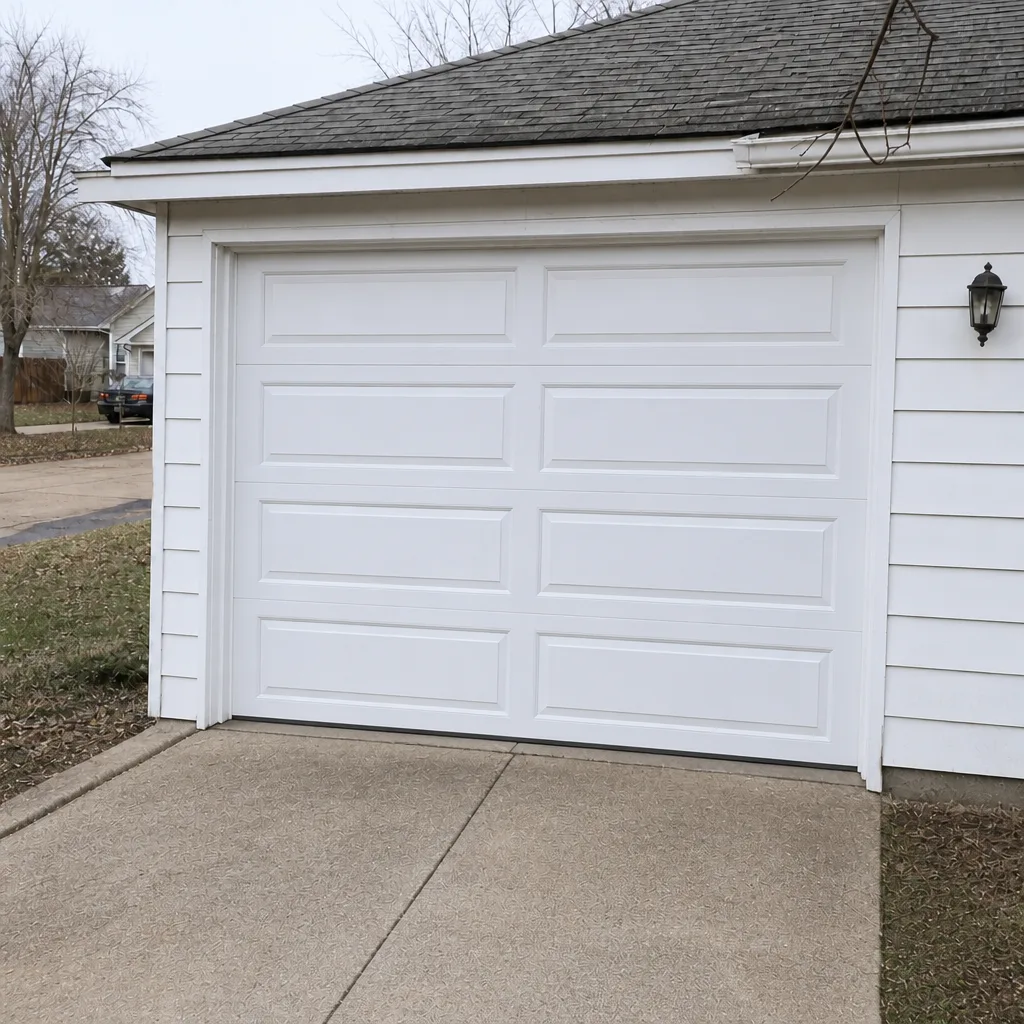 After
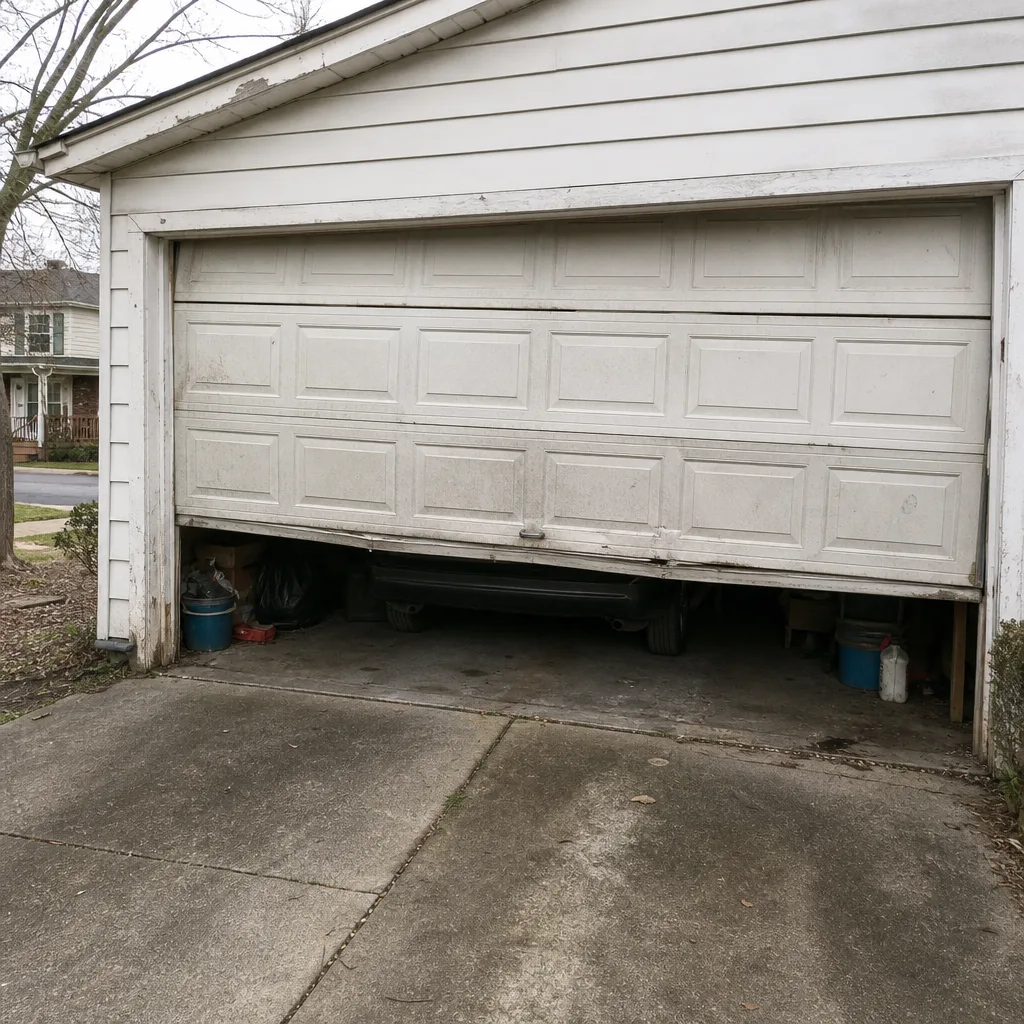 Before
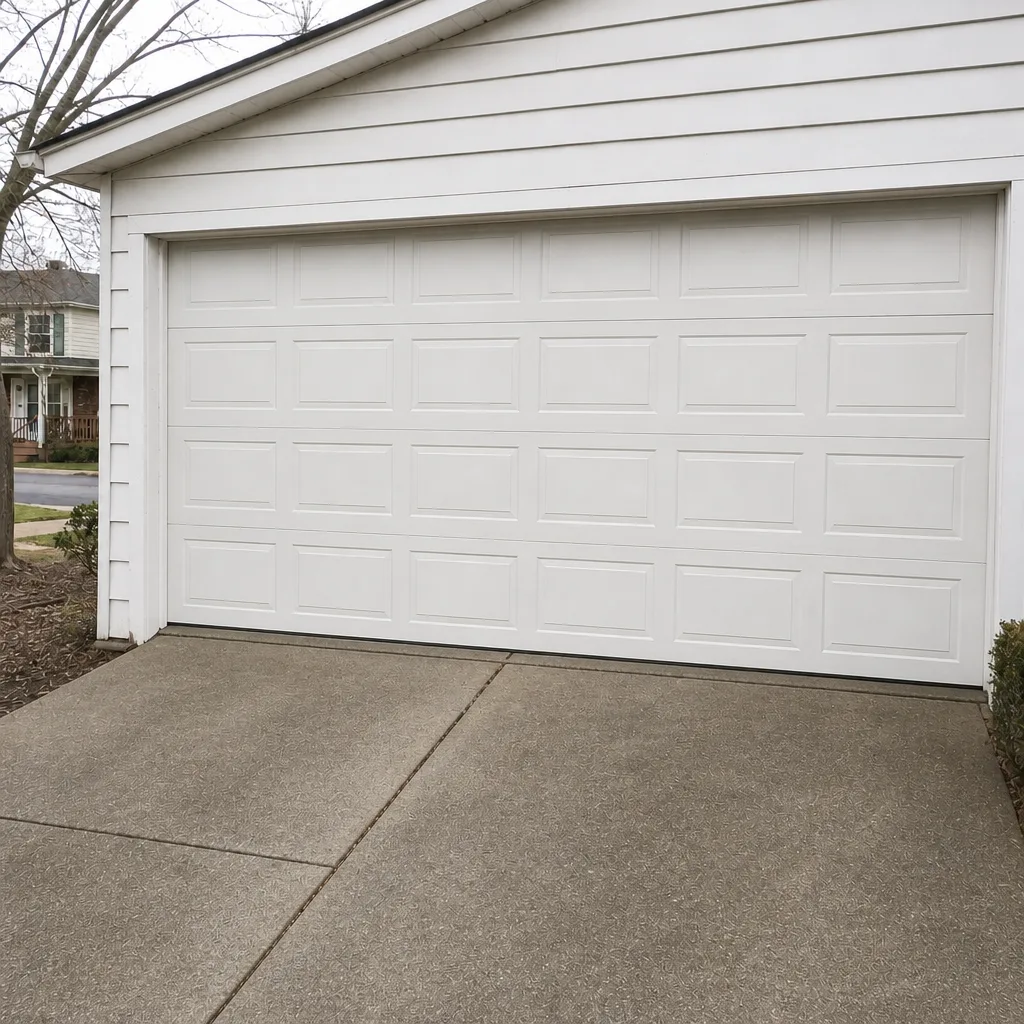 After
When to Call a Professional
Some garage door problems are fine to handle with a quick check and a screwdriver; others aren’t. Call a professional when a spring has snapped or a cable is frayed, when the door is stuck open or closed and forcing it isn’t working, when a track is bent, or when the door comes down unevenly or won’t reverse on the safety test. Call if the opener runs but the door doesn’t move, if a panel is cracked or a hinge is torn away, or if you’ve had a door installed and the opener needs to be matched to it. Our technicians have up to 11 years of experience and work on the brand you already have. Waldorf Garage Door Repair Pros offers free estimates in Waldorf. Call (844) 443-3856. We answer 24/7. Fast dispatch from 7am to 7pm, Sunday through Friday, and we’re closed Saturday. Same-day service is available when the door fails unexpectedly.
Frequently Asked Questions
Spring pricing depends on the door’s weight and whether you’re replacing one spring or a matched pair, which is usually the case. Because pairs are replaced together, a pair costs roughly twice a single-spring job. The written estimate sets the final price, and the estimate is free. Call (844) 443-3856 for an exact quote.
Yes, same-day service is available for urgent failures like a snapped spring, a stuck door, or an opener that won’t respond. We answer 24/7, and fast dispatch runs from 7am to 7pm, Sunday through Friday. Call (844) 443-3856 and we’ll get you on the schedule.
No. The price is quoted and agreed before any work starts, so the written estimate is the price you pay for the job described. If a technician finds something else while on site, you’ll get a separate quote and can decide before any extra work begins. Call (844) 443-3856 for a free estimate.
Yes. We service LiftMaster, Chamberlain, Genie, Clopay, Amarr, Wayne Dalton, Craftsman, and Raynor. That includes smart-home-connected openers, which sometimes fail on the app or pairing side rather than the motor. Call (844) 443-3856 to describe what’s happening and we’ll match the right technician.
Humidity speeds up rust on hinges, rollers, and brackets, and can swell wood-composite panels along the seams. That rust stiffens the door’s travel and makes the opener work harder. Checking and lubricating the hardware a bit more often keeps the door running smoothly in a humid climate.
If the door is sectional and only one or two panels are damaged, repair is usually the better choice, since panels can often be matched and swapped individually. If several panels are failing at once or the sections are no longer available, replacement makes more sense. A written estimate will show you both paths.
The Bottom Line
Your garage door is five systems working together, and the skill that saves the most money is knowing which one failed. Springs and cables are the dangerous parts and belong to a trained technician. A hard-to-lift door can wear out a perfectly good opener. Humidity and clay soil make hardware checks and track alignment a little more important in Waldorf than in drier places, and a free maintenance routine keeps small problems from turning into big ones. Most breakdowns are a contained repair, not a new door, as long as you diagnose before you replace. When the door stops working, we’re one call away.
Need a hand with a door that’s stuck, noisy, or overdue for a look? Waldorf Garage Door Repair Pros offers free estimates, upfront pricing, and a written quote before any work starts. Call (844) 443-3856. We answer 24/7. Fast dispatch from 7am to 7pm, Sunday through Friday.
Written by the team at Waldorf Garage Door Repair Pros.